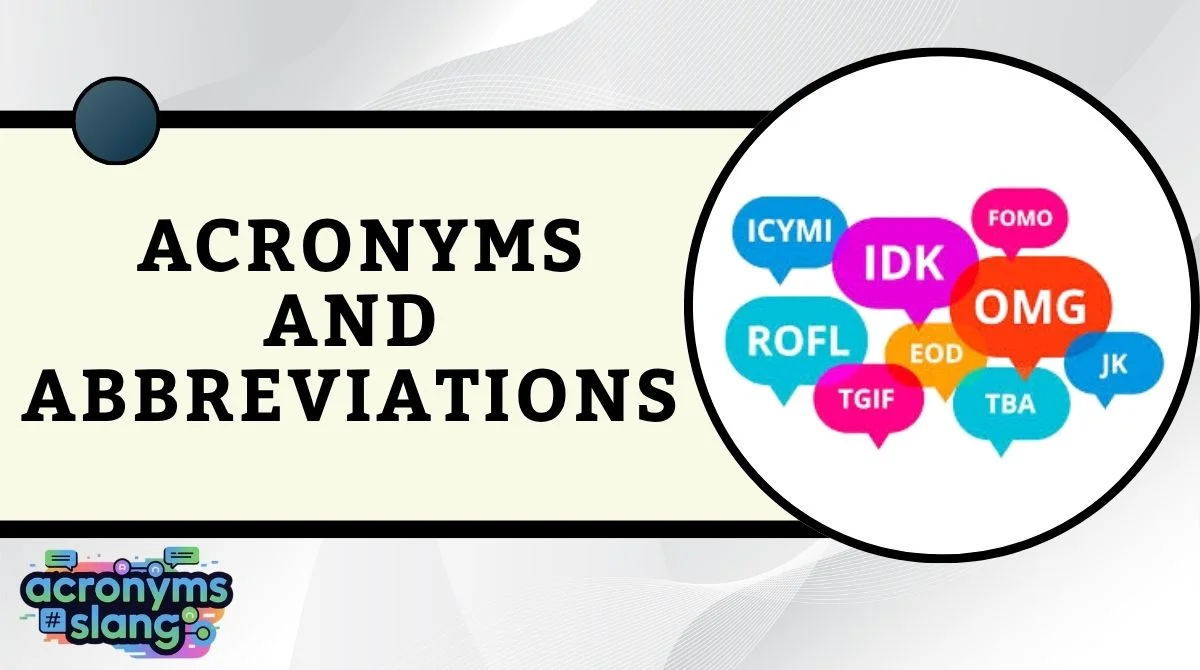

Acronyms have become a defining feature of modern communication. From casual texting to professional emails, they help people convey ideas quickly without sacrificing clarity—at least when used correctly.
In simple terms, acronyms are words formed from the initial letters of a phrase (like NASA), while abbreviations are shortened forms of words (like “etc.” or “Dr.”).
Although people often use these terms interchangeably, they serve slightly different linguistic purposes.
The rise of digital platforms, instant messaging, and global business communication has accelerated the use of acronyms dramatically.
Whether you’re scrolling social media, replying to a work email, or gaming online, you’re constantly encountering them.
Understanding their meaning isn’t just about vocabulary—it’s about tone, context, and cultural awareness.
This guide on “160+ acronyms and abbreviations” goes beyond simple definitions. It explains how these terms function in real-life scenarios, how they shape communication tone, and how to use them effectively without confusion or misinterpretation.
Quick Reference Table
| Acronym | Full Form | Meaning | Tone | Common Usage Context |
|---|---|---|---|---|
| ASAP | As Soon As Possible | Urgent request | Professional | Workplace |
| LOL | Laugh Out Loud | Something funny | Casual | Texting |
| FYI | For Your Information | Informative note | Neutral | Emails |
| BRB | Be Right Back | Temporary absence | Casual | Chat |
| IMO | In My Opinion | Personal view | Casual | Social Media |
| ETA | Estimated Time of Arrival | Time estimate | Professional | Logistics |
| DIY | Do It Yourself | Self-made approach | Informal | Lifestyle |
| CEO | Chief Executive Officer | Top executive | Formal | Business |
| DM | Direct Message | Private message | Casual | Social Media |
| TBD | To Be Decided | Not finalized | Neutral | Planning |
| IDK | I Don’t Know | Lack of knowledge | Casual | Chatting |
| TMI | Too Much Information | Oversharing | Playful | Texting |
| FAQ | Frequently Asked Questions | Common queries | Neutral | Websites |
| RIP | Rest In Peace | Condolence | Serious | Social |
14 Key Acronyms Explained in Context
ASAP
Full Form: As Soon As Possible
Simple Meaning: Indicates urgency without specifying an exact deadline.
Where It’s Commonly Used: Workplace emails, project management
Tone: Professional (can feel demanding if overused)
Example in Text Message: “Please send the report ASAP.”
Similar Acronyms: URG, STAT
LOL
Full Form: Laugh Out Loud
Simple Meaning: Signals amusement, often used even when not literally laughing.
Where It’s Commonly Used: Texting, social media
Tone: Casual / Playful
Example in Text Message: “That joke was terrible LOL”
Similar Acronyms: LMAO, ROFL
FYI
Full Form: For Your Information
Simple Meaning: Shares information without expecting action.
Where It’s Commonly Used: Emails, office communication
Tone: Neutral / Professional
Example in Text Message: “FYI, the meeting got moved.”
Similar Acronyms: NFY (Not For You), BTW
BRB
Full Form: Be Right Back
Simple Meaning: Indicates a short pause in conversation.
Where It’s Commonly Used: Chat, gaming
Tone: Casual
Example in Text Message: “BRB, grabbing coffee.”
Similar Acronyms: AFK
IMO
Full Form: In My Opinion
Simple Meaning: Softens statements by framing them as personal views.
Where It’s Commonly Used: Forums, social media
Tone: Casual
Example in Text Message: “IMO, that movie wasn’t great.”
Similar Acronyms: IMHO
ETA
Full Form: Estimated Time of Arrival
Simple Meaning: Predicts when something will happen or arrive.
Where It’s Commonly Used: Travel, logistics
Tone: Professional
Example in Text Message: “What’s your ETA?”
Similar Acronyms: ETD
DIY
Full Form: Do It Yourself
Simple Meaning: Completing tasks independently without professional help.
Where It’s Commonly Used: Crafts, home improvement
Tone: Informal
Example in Text Message: “I built this table DIY!”
Similar Acronyms: Handmade
CEO
Full Form: Chief Executive Officer
Simple Meaning: The highest-ranking executive in a company.
Where It’s Commonly Used: Corporate discussions
Tone: Formal
Example in Text Message: “She just became CEO of the firm.”
Similar Acronyms: CFO, COO
DM
Full Form: Direct Message
Simple Meaning: A private message sent on social platforms.
Where It’s Commonly Used: Instagram, Twitter
Tone: Casual
Example in Text Message: “DM me the details.”
Similar Acronyms: PM
TBD
Full Form: To Be Decided
Simple Meaning: Indicates something not finalized yet.
Where It’s Commonly Used: Planning, scheduling
Tone: Neutral
Example in Text Message: “The venue is TBD.”
Similar Acronyms: TBA
IDK
Full Form: I Don’t Know
Simple Meaning: Expresses uncertainty or lack of knowledge.
Where It’s Commonly Used: Chatting
Tone: Casual
Example in Text Message: “IDK what to wear.”
Similar Acronyms: IDC
TMI
Full Form: Too Much Information
Simple Meaning: Indicates oversharing.
Where It’s Commonly Used: Informal conversations
Tone: Playful
Example in Text Message: “TMI, I didn’t need to know that.”
Similar Acronyms: NSFW
FAQ
Full Form: Frequently Asked Questions
Simple Meaning: A collection of common queries and answers.
Where It’s Commonly Used: Websites, help sections
Tone: Neutral
Example in Text Message: “Check the FAQ page.”
Similar Acronyms: Q&A
RIP
Full Form: Rest In Peace
Simple Meaning: Expresses sympathy for someone who has passed away.
Where It’s Commonly Used: Social media, condolences
Tone: Serious
Example in Text Message: “RIP, he will be missed.”
Similar Acronyms: N/A
Acronyms vs Abbreviations vs Initialisms
Acronyms are pronounceable words formed from initials (e.g., NASA).
Initialisms use initials but are spoken letter by letter (e.g., FBI).
Abbreviations are shortened versions of words (e.g., “etc.” or “Mr.”).
Understanding this distinction helps avoid confusion, especially in formal writing.
Common Mistakes with Acronyms
Using acronyms in formal documents without explanation can confuse readers.
Assuming universal understanding often leads to miscommunication.
Overloading sentences with acronyms reduces readability.
Misjudging tone—like using “LOL” in serious contexts—can appear unprofessional.
Acronym Usage Guide
In professional emails:
Use sparingly and only when widely recognized. Define unfamiliar ones.
In academic writing:
Introduce the full form first, then use the acronym consistently.
In texting:
Freely used, but tone matters—some may sound sarcastic.
In international communication:
Be cautious. Acronyms may not translate culturally or linguistically.
Practice Section
Fill in the blanks
- Please respond ___ (ASAP)
- I’ll be back soon, ___
- ___, I think this is a bad idea
- What’s your ___?
- That was funny ___
- ___, meeting rescheduled
- I don’t know ___
- This is ___ information
- The date is ___
- Send me a ___
Multiple Choice
- ASAP means:
a) Later
b) Urgently ✅
c) Optional - LOL expresses:
a) Anger
b) Humor ✅
c) Sadness - FYI is used to:
a) Inform ✅
b) Order
c) Apologize - BRB indicates:
a) Ending chat
b) Temporary pause ✅
c) Ignoring - ETA refers to:
a) Cost
b) Time estimate ✅
c) Distance
Rewrite Using Acronyms
- I will be back soon → BRB
- For your information → FYI
- As soon as possible → ASAP
- I don’t know → IDK
- Laugh out loud → LOL
FAQs
What are acronyms used for?
They simplify communication by shortening long phrases.
Are acronyms appropriate in formal writing?
Only when widely accepted or clearly defined.
What is the difference between acronym and initialism?
Acronyms are pronounceable words; initialisms are spelled out.
Can acronyms change tone?
Yes, they can make messages casual, urgent, or even rude.
Why are acronyms popular online?
They save time and fit fast-paced digital communication.
Conclusion
Acronyms are more than shortcuts—they’re tools that shape how messages are perceived. Used correctly, they enhance clarity, efficiency, and tone.
Misused, they can confuse or even offend. The key lies in understanding context, audience, and intent.
Whether you’re writing a professional email or sending a quick text, thoughtful use of acronyms ensures your message lands exactly as intended.